 Uniforms · Since 1974
Digital pattern and marker workflow
Pattern development and marker planning help translate approved measurements into repeatable cutting instructions. Size grading, grain direction and fabric utilisation are considered before bulk cutting.
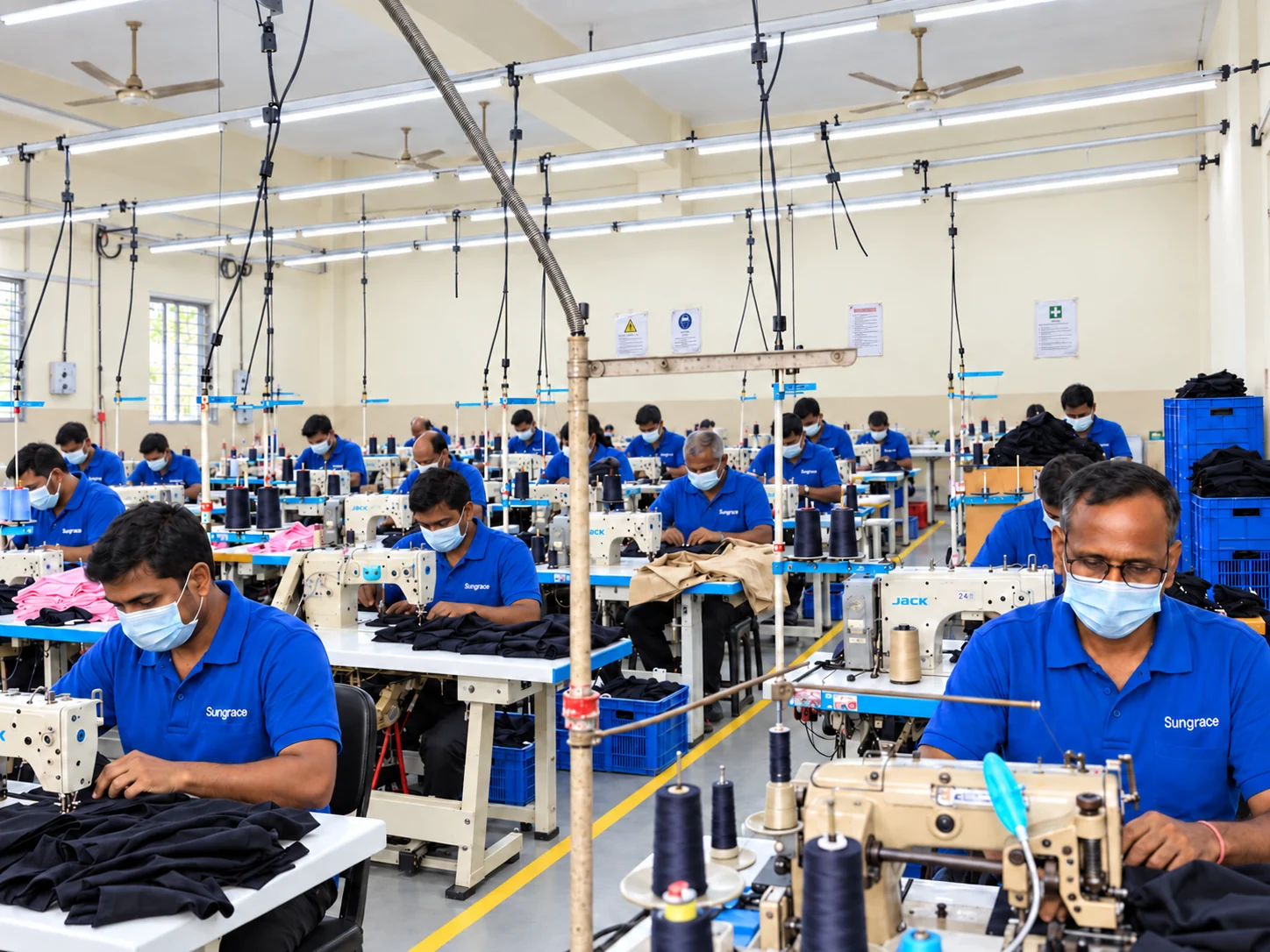
The people, equipment and practical experience behind every Sungrace uniform.
From CAD patterns and fabric cutting to stitching, embroidery, knitting and final packing, our manufacturing stages work together in-house in Jalandhar, Punjab.
Explore our knitting, embroidery and garment construction through photographs from the factory. Select any image for a closer view.
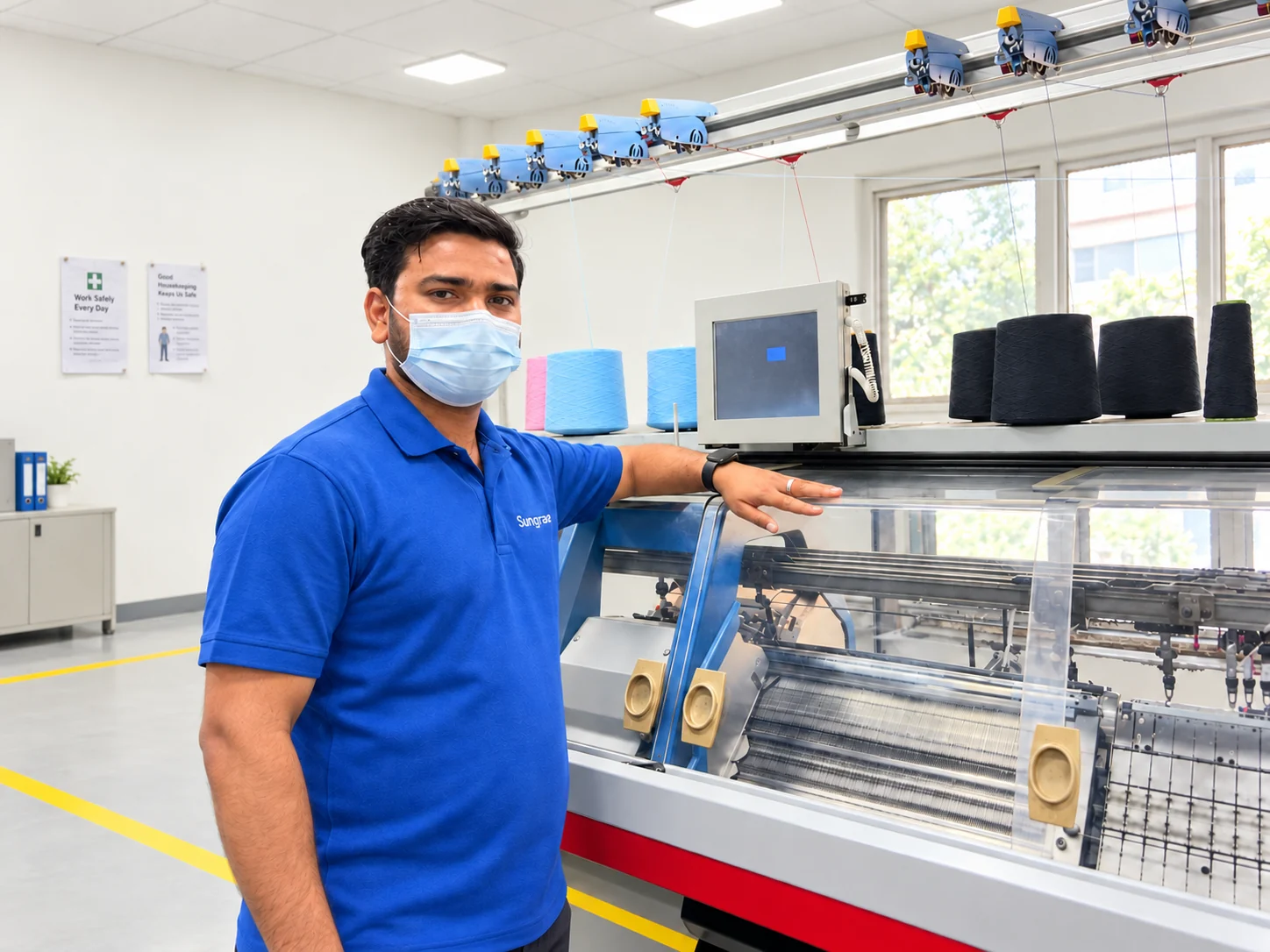
Enhanced visualisation of a masked Sungrace operator beside knitting equipment, with safety instructions on the wall.
Explore this capability →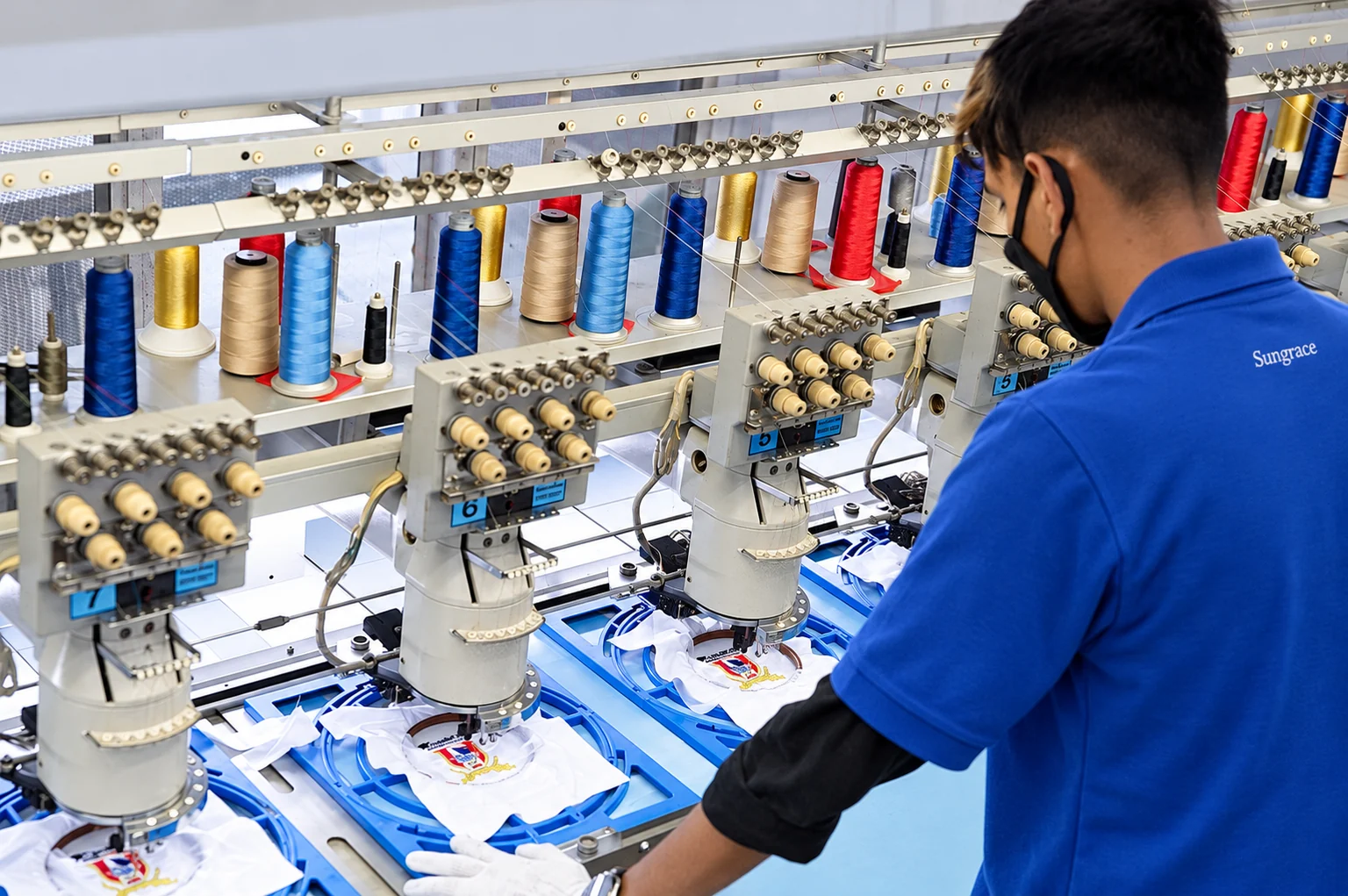
An operator tending embroidered garment panels at a multi-head embroidery workstation.
Explore this capability →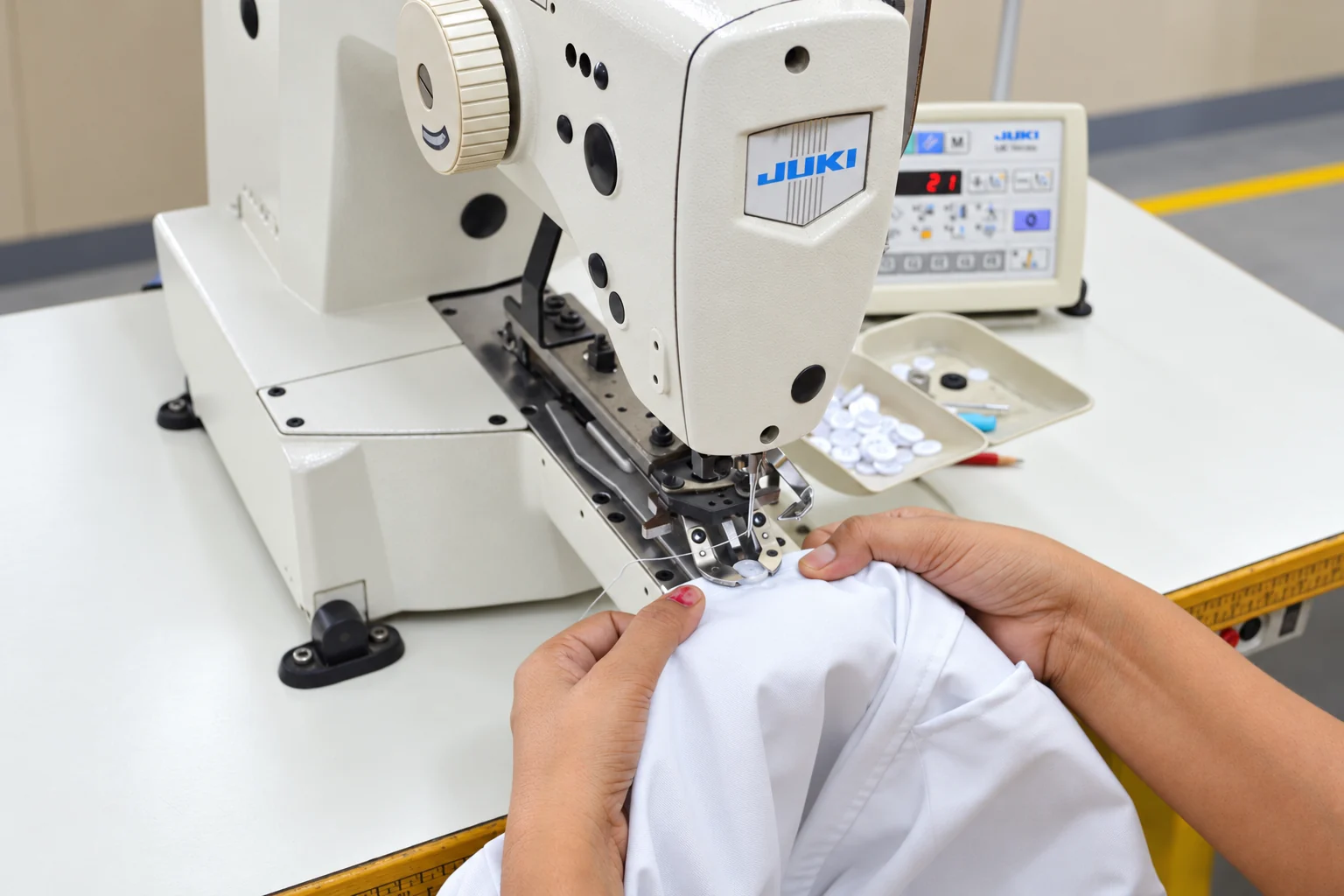
Hands guide a white garment under the Juki button-sewing machine.
Explore this capability →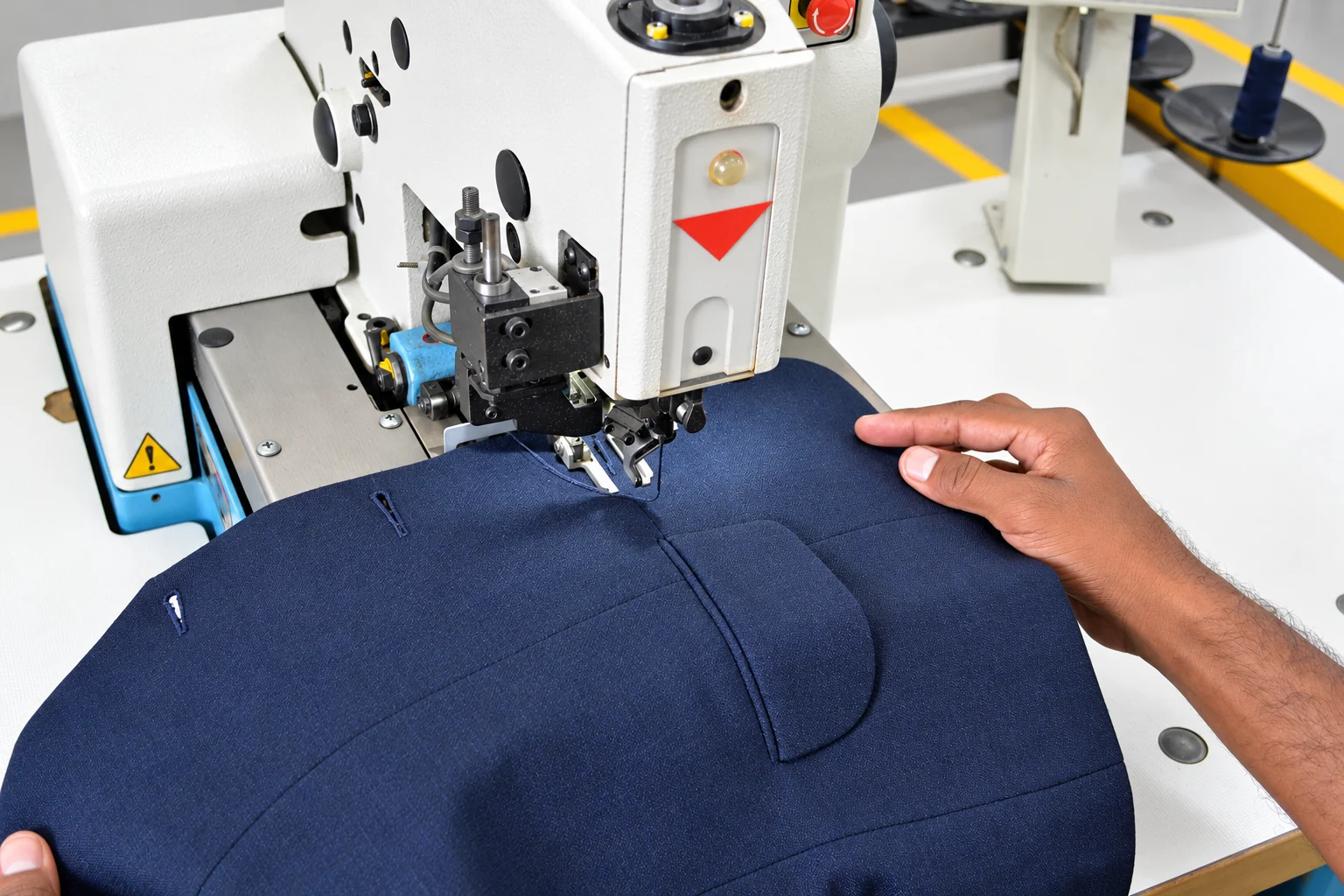
A navy blazer positioned for eyelet buttonhole work at the sewing station.
Explore this capability →Images are enhanced factory visualisations based on our photographs. Edits include masks, uniforms, additional workers, room dimensions, surfaces and safety signs. Arrange a visit to see the current Jalandhar facility.
Three short, silent clips from our manufacturing floor. Press play to watch each operation.
A short view of marked fabric layers being cut on the factory table.
Explore this capability →A close-up of fabric handling at a Pegasus sewing workstation.
Explore this capability →A view along the embroidery machine and its garment stations.
Explore this capability →Recorded factory footage, trimmed and colour-corrected for web playback. Clothing and surroundings in the video have not been digitally replaced.
Our equipment covers 19 operations and capabilities across development, garment construction, branding, knitwear and finishing. Each entry explains the equipment we use and its role in making your uniforms.
Pattern development and marker planning help translate approved measurements into repeatable cutting instructions. Size grading, grain direction and fabric utilisation are considered before bulk cutting.
Straight-knife cutting supports fabric lays; end cutters prepare clean lay ends; band-knife cutting supports controlled cutting of smaller shapes and components. The approved marker, fabric stability and operator handling remain central to accuracy.
Our fusing setup includes Hashima 450 and 600 equipment and pneumatic fusing capability. Heat, dwell time and pressure are matched to the fabric and interlining, with trial checks before production. This supports the shape and feel of collars, cuffs and other structured components.
Under-bed thread trimming supports efficient thread management and cleaner seam ends. Operators check stitch tension and seam starts to minimise thread build-up and bird nesting, helping keep the inside of the garment as carefully finished as the outside.
Overlock operations cover raw edges and support secure, consistent seam finishing. Machine setup, thread selection and feeding are matched to the garment and fabric.
Edge trimming supports a tidy edge as the specified flatlock or coverseam is formed. This is particularly useful where knit garments need comfortable seams and controlled stretch.
Dedicated multi-needle capability supports our bone-attachment operations and parallel rows of stitching. Attachments, needle arrangement and stitch settings are selected around the approved garment construction.
Different bed formats help operators handle flat panels and tubular openings. Elastic tension, stretch recovery and the finished opening are checked against the approved sample.
Dedicated buttonhole operations help maintain the agreed position, length and finish. Buttonholes are checked with the actual button and fabric combination.
Controlled button placement and sewing support a neat, functional fastening. Thread security, alignment and the ease of fastening are checked during finishing.
Bartacks reinforce selected stress points such as pocket openings and belt-loop ends. Their placement and density are specified to suit the design and fabric.
Dedicated eyelet buttonhole capability supports tailored jacket construction. Buttonhole shape and position are reviewed alongside lapels, fronts and the selected buttons.
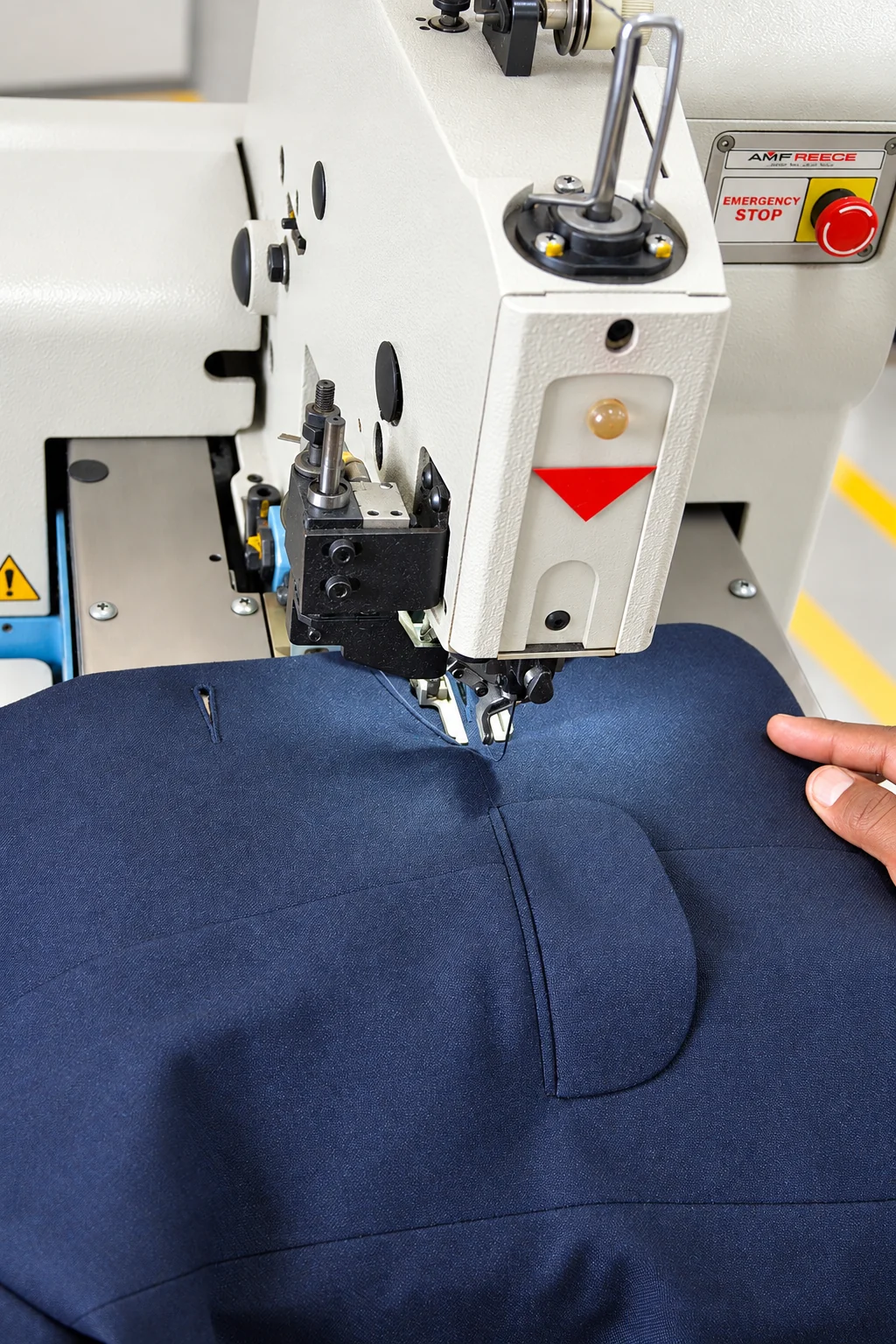
Blind hemming helps produce a discreet finish on suitable garments. The stitch is adjusted for fabric thickness to reduce visible marks on the face of the material.
Thread trimming and suction support removal of loose thread ends before the garment moves through final inspection.
Steam finishing helps present collars, fronts, sleeves and hems cleanly. Temperature, steam and pressing technique are selected for the fabric and construction.
Knitwear is finished with care for texture, shape and stretch. Controlled handling helps avoid unwanted shine, flattening and distortion.
Our checking and packing section uses equipment sourced from China. Garments are reviewed for appearance, size identification, quantities and the agreed packing presentation.
Our Barudan embroidery machine brings school crests, company identities and approved artwork onto garments in-house. Thread colours, design size, backing and placement are reviewed with the sample to achieve a clear, balanced embroidered finish.
Our Stoll multigauge knitting machine supports in-house development of uniform knitwear. Yarn, knit structure, panel dimensions and the intended feel are considered together when sampling sweaters, cardigans and other knitted garments.
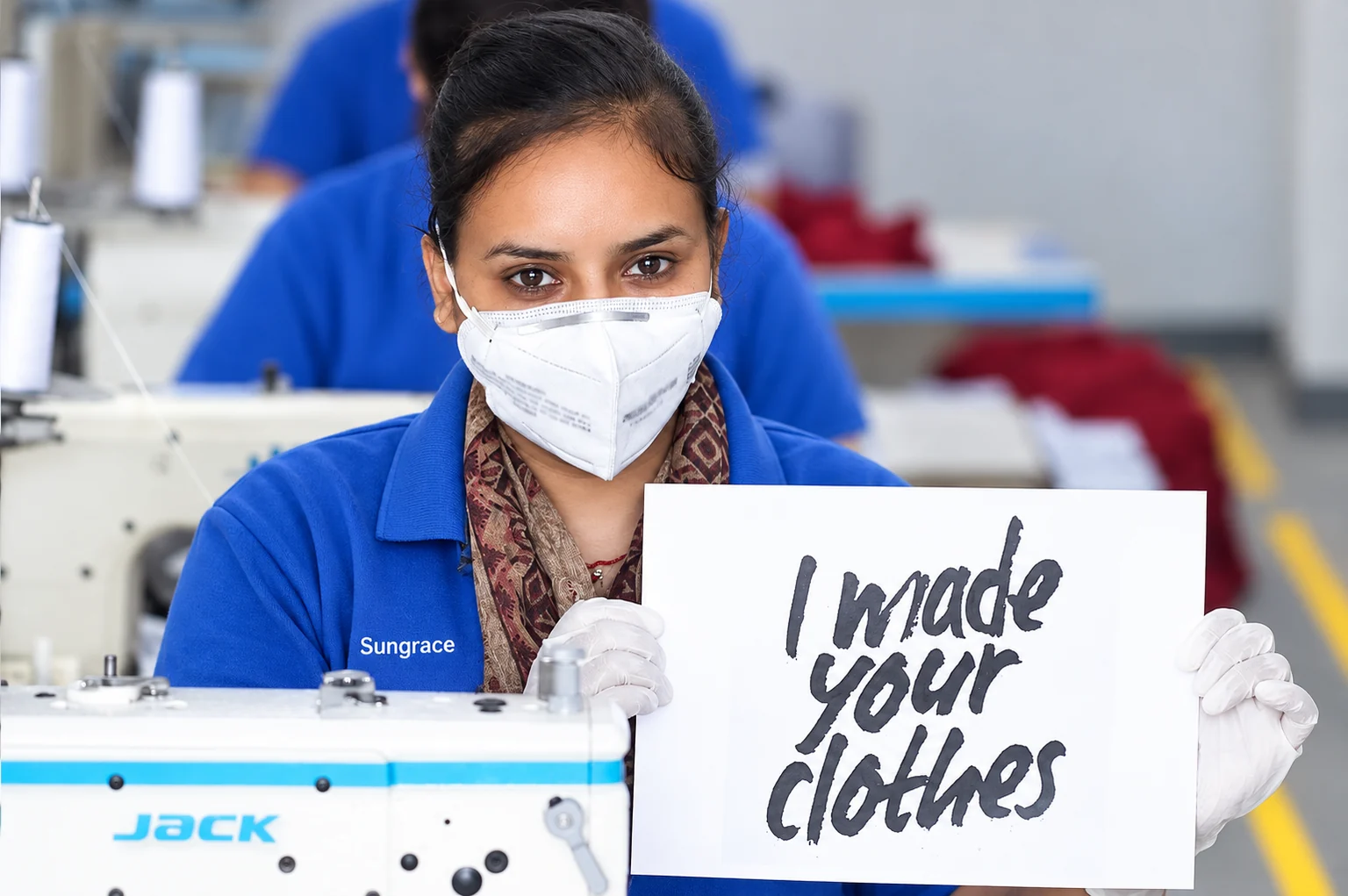
Women’s empowerment is part of the way we want our manufacturing business to grow. We place emphasis on practical skills, participation in production and meaningful opportunities to build a career in garment manufacturing.
Alongside our machinery, we value the judgement of the person handling the fabric, checking a seam and preparing the finished garment. Our commitment is to give that work respect.
We encourage women to learn, contribute and develop their capabilities across garment manufacturing. Skills and experience deserve recognition in the everyday work of the factory.
We support training and recruitment of new candidates through collaboration with government ITI colleges, connecting practical garment skills with opportunities to work in manufacturing.
Our commitments include no child labour, wages above applicable minimum wages, compliance with applicable labour laws and strict attention to workplace respect under the POSH Act.
We are planning to install Lectra automatic cutting equipment as a future investment. Our current cutting setup comprises six straight-knife cutters, four end cutters and one band-knife cutter, supported by CAD pattern and marker planning.
For your order, we plan production around the approved garment, fabric, size quantities and required delivery date. Share your brief so our team can discuss the appropriate manufacturing schedule.
Meet the manufacturing team, discuss your sample and see how the required operations fit together. Factory visits are arranged by appointment.
Explore the steps behind developing, cutting and finishing an order.
Review how patterns, grading and cutting relate to your approved specification.
Plan pressing, finishing and presentation requirements alongside the garment construction.
Agree measurements, workmanship and acceptance requirements before production.