 Uniforms · Since 1974
Sustainable clothing
How to give school uniforms a second life
Sungrace Uniforms ·
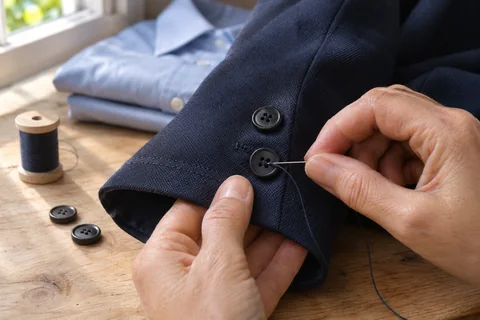
A pupil outgrows a blazer. The elbows are sound, the lining is intact and one cuff button is missing. Whether that blazer goes back on the uniform rail or into a cupboard can depend on something as small as a shopkeeper having the right spare button.
Buy for the second wearer
When a school chooses its next uniform, lay a well-worn example beside the supplier’s new sample. Look where the first garment failed. A torn pocket mouth calls for a different change from a shiny elbow or a hem that a pupil has outgrown. Give the maker that observation before agreeing on a heavier fabric or a more expensive finish.
Try one repair on the sample. Ask a local tailor to replace the cuff button or let down a trouser hem. Can they reach the stitching, find a matching trim and return the garment to its original shape? Keep a labelled spare and the care instructions with the school shop. A replacement crest that can be sewn onto an existing blazer may also help families keep wearing an older design.
Ask what the fabric claim covers
If a quotation describes a polo as containing recycled polyester, ask for the percentage, the component it applies to and the evidence for that batch. The body fabric, collar and sewing thread can have different compositions. Keep the supplier’s written declaration with the approved sample and repeat only the claim it supports.
Then wash the sample using the care routine families can realistically follow. Measure the length before and after, check that the collar still lies flat and rub the damp fabric against a white cloth to look for obvious colour transfer. Record anything that needs a formal test before the order goes ahead.
Give returned uniforms somewhere to go
In May 2026, Apparel Resources reported on BIBA’s garment exchange in India. Customers could return used clothing at participating stores. BIBA’s partners planned to turn donated fabric into blankets and other essentials. A school can borrow one practical idea from the exchange. Arrange who will receive each type of garment before asking families to bring anything in. Read the Apparel Resources report on BIBA’s garment exchange.
For a school, the simplest destination for a wearable shirt may be another pupil. Arrange a return afternoon before the next fitting day. Check pockets, remove personal name labels with the family’s permission and sort clean garments by their measured size. A volunteer can keep three separate counts as each item moves through the shop.
| Condition on return | Next step |
|---|---|
| Ready to wear | Measure, tag and offer the garment at the next fitting. |
| One repair needed | Record the fault, assign the repair and check the garment before reissue. |
| Too worn to reissue | Ask the local textile collector which fibres and conditions it accepts before setting the item aside. |
Count the garments pupils actually wear again
Suppose a school collects 30 blazers. Eighteen are ready to issue, eight need repairs and four are too worn. At the next fitting, 16 ready-to-wear blazers and five repaired ones find new owners. The school can report 21 blazers reissued, alongside the nine whose outcomes it still needs to track. That is a figure families can understand and the shop can use when placing its next order.